Cloud Security Novice to Native in 10 Steps: A CNAPP Approach
RSA Conference 2024 · Track Session
Overview
This talk, titled "Cloud Security Novice to Native in 10 Steps: A CNAPP Approach," aims to demystify the complex landscape of cloud security, guiding organizations from foundational understanding to mature, integrated protection strategies. The core of the presentation revolves around the Cloud-Native Application Protection Platform (CNAPP) framework, a unified approach designed to address the multifaceted security challenges inherent in modern cloud environments. While the provided transcript captures only the speaker's introductory remarks, it clearly sets the stage for a comprehensive discussion on the necessity, benefits, and practical implementation of CNAPP.
Key moments
- 0:00 Welcome and introduction to Cloud Security
- 0:15 Introducing the CNAPP (Cloud Native Application Protection) approach
- 0:27 Examples and value of the CNAPP approach
- 0:40 Expected action items and Q&A at the end
- 0:50 Beginning to discuss cloud security challenges
Cloud Security Novice to Native in 10 Steps: A CNAPP Approach
Speakers: Not specified
Conference: RSAC 2024
YouTube: https://www.youtube.com/watch?v=V8Gn2EYL3WQ
Overview
This talk, titled "Cloud Security Novice to Native in 10 Steps: A CNAPP Approach," aims to demystify the complex landscape of cloud security, guiding organizations from foundational understanding to mature, integrated protection strategies. The core of the presentation revolves around the Cloud-Native Application Protection Platform (CNAPP) framework, a unified approach designed to address the multifaceted security challenges inherent in modern cloud environments. While the provided transcript captures only the speaker's introductory remarks, it clearly sets the stage for a comprehensive discussion on the necessity, benefits, and practical implementation of CNAPP.
The speaker emphasizes the persistent challenges in cloud security, despite the cloud's 15-year tenure, indicating that many organizations still find it a "relatively new" and often daunting domain. The talk promises to illustrate how the CNAPP approach "makes sense," provides "value," and effectively "helps protect your cloud," culminating in actionable steps for attendees. This subject matter is critically important for any organization leveraging cloud infrastructure, as it offers a strategic pathway to overcome fragmented security solutions and achieve a holistic security posture across the entire cloud-native application lifecycle. The speaker's enthusiasm for cloud security underscores the urgency and relevance of adopting robust, integrated protection mechanisms in today's dynamic threat landscape.
Background
▶ Watch: Welcome and introduction to Cloud Security (0:00)
The journey to cloud-native security is fraught with challenges, a point the speaker immediately highlights. For many organizations, the rapid adoption of cloud services over the past decade and a half has outpaced their ability to secure these evolving environments effectively. This disparity often stems from several key factors, which collectively contribute to the complexity of cloud security:
Firstly, the ephemeral and dynamic nature of cloud resources stands in stark contrast to traditional on-premises infrastructure. Virtual machines, containers, serverless functions, and microservices are provisioned, scaled, and de-provisioned at an unprecedented rate. This agility, while a boon for development and operations, creates a constantly shifting attack surface that traditional, static security tools struggle to monitor and protect. Security teams often grapple with a lack of visibility into these transient assets, leading to blind spots and potential vulnerabilities.
Secondly, the shared responsibility model is a cornerstone of cloud security, yet it remains a frequent source of confusion and misconfiguration. Cloud providers (like AWS, Azure, GCP) are responsible for the security of the cloud (the underlying infrastructure, hardware, global network), while customers are responsible for security in the cloud (their data, applications, configurations, identity and access management). Misunderstanding this demarcation often leads to critical security gaps, particularly in areas like identity and access management (IAM), network configurations, and data encryption, which fall squarely on the customer's plate.
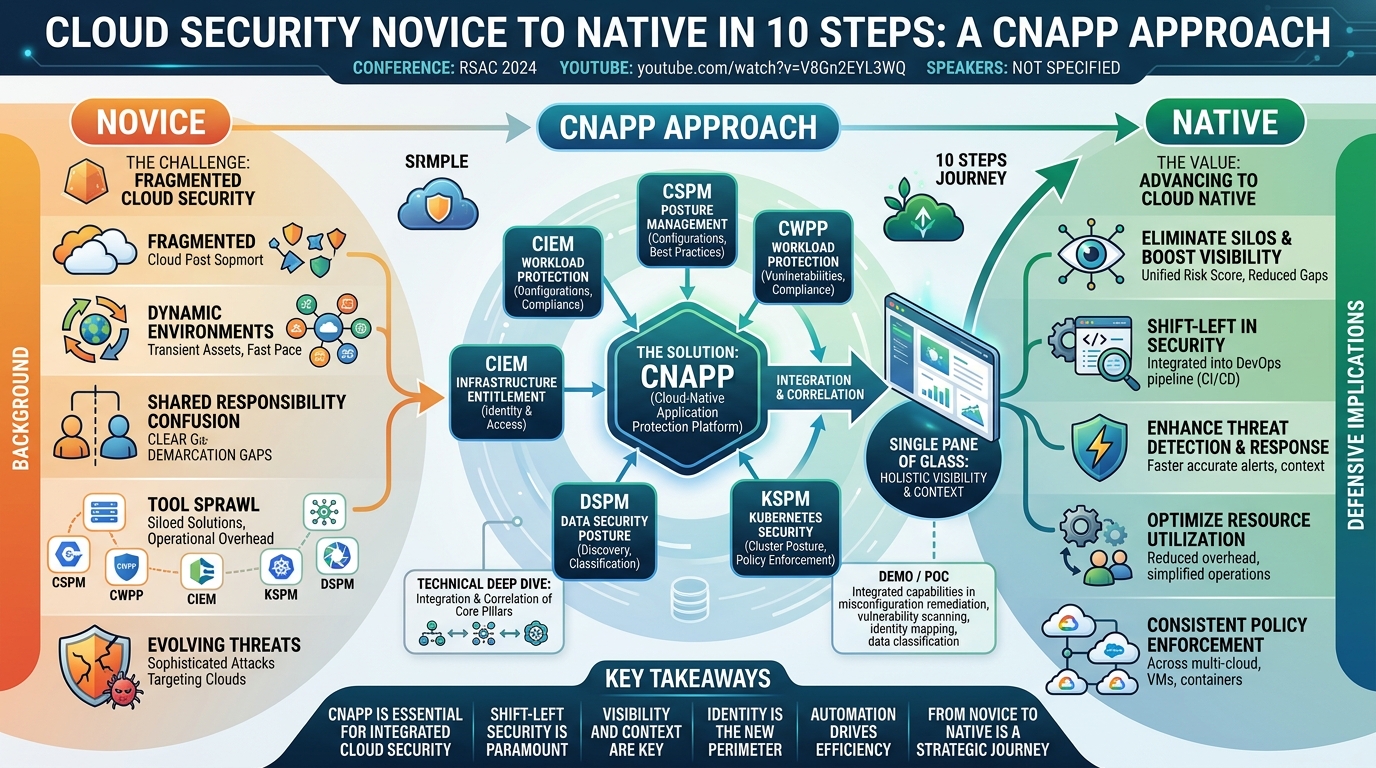
Thirdly, the sheer proliferation of cloud services and tools adds another layer of complexity. Each cloud provider offers hundreds of services, from compute and storage to databases, machine learning, and IoT. Securing these diverse services requires specialized knowledge and often leads to a fragmented security toolchain. Organizations frequently deploy point solutions for different aspects of cloud security – a tool for Cloud Security Posture Management (CSPM), another for Cloud Workload Protection Platform (CWPP), yet another for Cloud Infrastructure Entitlement Management (CIEM), and so on. This siloed approach creates operational overhead, inconsistent policies, and gaps in threat detection and response.
Finally, the increasing sophistication of cloud-specific attack vectors demands a comprehensive defense. Attackers exploit misconfigurations, overly permissive IAM policies, unpatched vulnerabilities in workloads, and insecure API endpoints. Traditional perimeter-based security is largely ineffective in the distributed, borderless cloud environment. The need for continuous monitoring, automated remediation, and a holistic view of security risks across the entire cloud ecosystem has become paramount.
It is against this backdrop of dynamic environments, shared responsibilities, tool sprawl, and evolving threats that the Cloud-Native Application Protection Platform (CNAPP) emerges as a critical architectural shift. CNAPP represents an evolution from disparate security tools to an integrated platform designed to provide full lifecycle security for cloud-native applications, from development to production. The talk's premise is to guide organizations through adopting this unified approach, moving them from a reactive, fragmented security posture to a proactive, integrated defense strategy.
Key Findings
▶ Watch: Introducing the CNAPP (Cloud Native Application Protection) approach (0:15)
While the provided transcript is introductory, the core message of the talk, as inferred from its title and stated objectives, is to highlight the transformative "value" and "sense" of adopting a CNAPP approach. The key findings, therefore, are not specific discoveries in a research sense, but rather the strategic advantages and operational efficiencies gained by embracing this integrated security paradigm. These "findings" represent the speaker's core arguments for why organizations should transition from fragmented security solutions to a unified CNAPP.
Firstly, a paramount finding is the elimination of security silos and enhanced visibility. Traditional cloud security often involves multiple disparate tools, each addressing a specific domain like posture, workload, or identity. CNAPP consolidates these functions, offering a single pane of glass for security teams. This integration provides a holistic view of risks across the entire cloud environment, from infrastructure configurations to application code, runtime workloads, and data. This unified visibility is crucial for identifying complex attack chains that might span multiple layers and for understanding the true blast radius of a potential compromise.
Secondly, CNAPP facilitates a significant shift-left in security. By integrating security controls and scanning capabilities directly into the DevOps pipeline (CI/CD), vulnerabilities and misconfigurations can be identified and remediated much earlier in the development lifecycle. This proactive approach drastically reduces the cost and effort associated with fixing issues discovered late in production, aligning with the "novice to native" progression by embedding security from the outset. This early detection capability is a cornerstone of cloud-native agility, ensuring security keeps pace with development speed.
Thirdly, the adoption of CNAPP leads to improved threat detection and response capabilities. By correlating data from various security domains – such as misconfigurations, vulnerability scans, runtime threats, and identity anomalies – CNAPP can provide richer context for alerts, reducing false positives and enabling faster, more accurate incident response. For instance, if a misconfigured S3 bucket (CSPM finding) is accessed by an over-privileged identity (CIEM finding) and then used to exfiltrate sensitive data (DSPM finding), a CNAPP can link these events to paint a complete picture of an attack, which disparate tools might miss.
Fourthly, CNAPP offers optimized resource utilization and reduced operational overhead. Managing multiple security tools, each with its own agents, dashboards, and reporting mechanisms, consumes significant time and resources. A consolidated CNAPP platform streamlines security operations, automates routine tasks, and simplifies compliance reporting. This efficiency allows security teams to focus on higher-value activities like threat hunting and strategic planning, rather than tool management.
Finally, a critical finding is the enhanced ability to enforce consistent security policies across diverse cloud environments and application architectures. Whether an organization uses VMs, containers, Kubernetes, or serverless functions across multiple cloud providers, CNAPP provides a unified policy engine. This consistency is vital for maintaining a strong security posture as organizations scale their cloud footprint and adopt more complex cloud-native patterns. The "10 steps" likely outline a methodical approach to achieving these benefits, guiding users through the journey of realizing CNAPP's full potential.
Technical Deep Dive
▶ Watch: Examples and value of the CNAPP approach (0:27)
The "Cloud Security Novice to Native" journey, particularly through a CNAPP approach, necessitates a deep understanding of its integrated technical components. A Cloud-Native Application Protection Platform is not a single tool but a comprehensive framework that unifies several critical security capabilities, providing end-to-end protection across the entire cloud-native application lifecycle. While the transcript does not delve into specific architectural details, a robust CNAPP typically integrates the following core pillars:
- Cloud Security Posture Management (CSPM): This foundational component focuses on identifying and remediating misconfigurations across cloud infrastructure. CSPM continuously scans cloud environments (AWS, Azure, GCP, etc.) for deviations from security best practices, industry benchmarks (e.g., CIS Benchmarks), and regulatory compliance frameworks (e.g., GDPR, HIPAA, PCI DSS). It checks configurations of services like S3 buckets, EC2 instances, Azure Storage Accounts, network security groups, and databases. A key technical aspect is its ability to map these configurations against a vast library of rules and policies, often leveraging API integrations with cloud providers to discover assets and their settings. Advanced CSPM solutions can also provide remediation guidance or even automated remediation for detected issues, acting as a critical first line of defense against common attack vectors.
- Cloud Workload Protection Platform (CWPP): CWPP extends security to the runtime environment of cloud workloads, including virtual machines, containers, and serverless functions. Technically, CWPP often involves deploying agents or leveraging native cloud capabilities to monitor workload behavior, detect malware, identify vulnerabilities in operating systems and application dependencies, and enforce network segmentation. For containers and Kubernetes, CWPP solutions integrate into the CI/CD pipeline to scan container images for vulnerabilities (e.g., CVEs in base images or application libraries) and ensure compliance with security policies before deployment. At runtime, they monitor container behavior for anomalous activity, enforce network policies between pods, and detect exploits targeting containerized applications. This includes host-level intrusion detection, file integrity monitoring, and application whitelisting.
- Cloud Infrastructure Entitlement Management (CIEM): CIEM addresses the complex challenge of managing and securing identities and permissions in cloud environments. With the proliferation of users, roles, service accounts, and managed identities, understanding who has access to what, and what they can actually do, becomes critical. CIEM solutions analyze Identity and Access Management (IAM) policies, roles, and permissions across cloud providers to identify excessive privileges, dormant accounts, and potential privilege escalation paths. Technically, CIEM leverages graph databases and sophisticated algorithms to map out effective permissions, detect "toxic combinations" of privileges, and provide recommendations for least privilege enforcement. It's crucial for mitigating risks associated with over-provisioned identities, which are a common target for attackers.
- Data Security Posture Management (DSPM): As data increasingly resides in various cloud storage services (databases, object storage, data lakes), DSPM focuses on understanding where sensitive data resides, who has access to it, and how it is protected. DSPM technically involves data discovery and classification across cloud data stores, identifying PII, financial data, or other sensitive information. It then assesses the security posture of these data stores, checking for proper encryption, access controls, and compliance with data privacy regulations. DSPM helps prioritize data-related risks and ensures that sensitive information is adequately secured throughout its lifecycle in the cloud.
- Kubernetes Security Posture Management (KSPM): While often integrated within CWPP or CSPM, KSPM focuses specifically on the unique security challenges of Kubernetes environments. This includes scanning Kubernetes configurations (e.g.,
kube-apiserversettings, pod security policies, network policies) for misconfigurations, ensuring compliance with Kubernetes security best practices, and identifying vulnerabilities within the cluster components. KSPM tools analyze YAML manifests, cluster roles, and role bindings to enforce security policies from development through runtime, ensuring that the orchestration layer itself is secure.
The true power of CNAPP lies in the integration and correlation of data from these disparate components. Instead of fragmented alerts from individual tools, a CNAPP platform aggregates and contextualizes security events, providing a unified risk score and prioritized remediation actions. This often involves a centralized data lake for security telemetry, advanced analytics, machine learning to detect anomalies, and automation engines to trigger alerts or even orchestrate remediation workflows. For instance, a CNAPP might detect a vulnerability in a container image (CWPP), find that the container is running with excessive privileges (CIEM) on a misconfigured Kubernetes cluster (KSPM), and that it has access to a sensitive data store (DSPM), all while violating a corporate CSPM policy. This holistic view enables security teams to understand the full attack surface and respond more effectively. The "10 steps" would logically guide organizations through the methodical implementation and integration of these technical pillars to achieve a native cloud security posture.
Demo / Proof of Concept
▶ Watch: Expected action items and Q&A at the end (0:40)
The speaker explicitly states an intention to "show you some examples how this approach makes sense," implying that a demonstration or proof of concept would have been a significant part of the talk. However, the provided transcript only covers the introduction, so no specific details about the demo were captured.
Based on the talk's title and the nature of CNAPP, a compelling demonstration would likely have showcased the platform's integrated capabilities in identifying and addressing various cloud security risks. Such a demo might have included:
- Posture Misconfiguration Detection and Remediation: Illustrating how a CNAPP quickly identifies a publicly exposed S3 bucket (CSPM), an overly permissive IAM role (CIEM) allowing access to that bucket, or a Kubernetes pod running with root privileges (KSPM/CWPP). The demo could then show the platform's ability to provide guided remediation steps or even automatically apply the necessary fixes, such as tightening bucket policies or revoking excessive permissions.
- Vulnerability Management and Runtime Protection: A demonstration could involve deploying a vulnerable container image (CWPP) into a Kubernetes cluster. The CNAPP would then scan the image in the CI/CD pipeline, flagging known CVEs, and subsequently monitor its runtime behavior for exploit attempts or anomalous process execution. This would highlight the platform's "shift-left" capabilities and real-time threat detection.
- Identity and Access Governance: Showcasing how CIEM capabilities within CNAPP visualize the "effective permissions" of an identity, revealing paths to privilege escalation that might be hidden in complex IAM policies. This could involve demonstrating how a user or service account, through a chain of roles and trusts, could gain access to sensitive resources, and how the CNAPP identifies and recommends mitigating these privilege pathways.
- Data Security and Compliance: A demo might illustrate the discovery and classification of sensitive data within cloud storage (DSPM), followed by an assessment of the security controls around that data. For instance, showing how the CNAPP flags unencrypted data stores containing PII, or how it identifies violations of data residency policies.
The ultimate goal of such a demonstration would be to concretely illustrate how an integrated CNAPP solution provides superior visibility, faster detection, and more efficient remediation compared to managing disparate security tools. The "examples" would have underscored the practical value and operational benefits of moving from a novice understanding to a native implementation of cloud security.
Defensive Implications
▶ Watch: Beginning to discuss cloud security challenges (0:50)
The adoption of a CNAPP approach fundamentally redefines defensive strategies in the cloud, moving organizations from a reactive, fragmented posture to a proactive, integrated defense. The "action items" promised by the speaker would undoubtedly focus on leveraging CNAPP to fortify cloud environments effectively.
- Establish a Unified Cloud Security Strategy: The primary defensive implication is the need to consolidate security efforts under a single, integrated platform. Instead of managing multiple point solutions for CSPM, CWPP, CIEM, DSPM, and KSPM, organizations should seek CNAPP solutions that combine these capabilities. This reduces operational overhead, eliminates security blind spots, and ensures consistent policy enforcement across diverse cloud resources. Security teams should prioritize platforms that offer deep integrations with their existing cloud infrastructure and DevOps toolchains.
- Implement Security "Shift Left" Principles: CNAPP enables security to be embedded early in the development lifecycle. Defenders must advocate for and implement security scanning (for vulnerabilities, misconfigurations, and compliance issues) within the CI/CD pipeline. This means integrating CNAPP tools into source code repositories, container registries, and deployment pipelines. By catching issues before deployment, organizations significantly reduce the attack surface in production and lower the cost of remediation. This also fosters a culture of shared security responsibility between development and security teams.
- Prioritize Identity and Access Management (IAM) Hygiene: Given that misconfigured IAM is a leading cause of cloud breaches, defenders must leverage CNAPP's CIEM capabilities to continuously monitor and enforce least privilege. This involves regularly reviewing and rightsizing permissions for human users and service accounts, identifying and removing dormant or overly permissive access, and detecting anomalous identity behavior. Implementing Just-in-Time (JIT) access and Privileged Access Management (PAM) principles, facilitated by CIEM, can drastically reduce the risk of identity-based attacks.
- Continuous Posture Management and Compliance: The dynamic nature of the cloud demands continuous monitoring of configurations. Defenders should utilize CNAPP's CSPM and KSPM capabilities to automatically scan cloud environments for misconfigurations against industry benchmarks (e.g., CIS Foundations Benchmark), regulatory compliance frameworks (e.g., SOC 2, ISO 27001), and internal security policies. Automated remediation workflows, where appropriate, can significantly reduce the window of exposure for common misconfigurations. Regular reporting and auditing facilitated by CNAPP are crucial for demonstrating compliance to internal and external stakeholders.
- Enhance Runtime Threat Detection and Response: While shifting left is crucial, runtime protection remains vital. Defenders need to utilize CNAPP's CWPP features to monitor workloads (VMs, containers, serverless) for known vulnerabilities, malware, and suspicious behavior. This includes host-level intrusion detection, network segmentation, and behavioral anomaly detection. Integrating CNAPP alerts into existing Security Information and Event Management (SIEM) or Security Orchestration, Automation, and Response (SOAR) platforms allows for faster incident response and automated playbooks to contain threats.
- Secure Data Throughout Its Lifecycle: With DSPM capabilities, defenders can gain visibility into where sensitive data resides in the cloud, how it's classified, and its protection status. Actionable steps include ensuring data encryption at rest and in transit, enforcing strict access controls to data stores, and monitoring for unauthorized data access or exfiltration. This is critical for meeting data privacy regulations and preventing data breaches.
By systematically implementing these defensive strategies through a CNAPP, organizations can achieve a mature, "native" cloud security posture that is resilient against evolving threats and aligned with the agility of cloud-native development. The "10 steps" would serve as a practical roadmap for this transformational journey, guiding security teams from reactive firefighting to proactive, integrated protection.
Key Takeaways
- CNAPP is Essential for Integrated Cloud Security: A Cloud-Native Application Protection Platform (CNAPP) unifies disparate security tools (CSPM, CWPP, CIEM, DSPM, KSPM) into a single, comprehensive framework, providing holistic protection across the entire cloud-native application lifecycle.
- Shift-Left Security is Paramount: Embedding security scanning and policy enforcement early in the DevOps pipeline through CNAPP significantly reduces vulnerabilities and misconfigurations before they reach production, lowering remediation costs and accelerating secure development.
- Visibility and Context are Key: CNAPP provides a single pane of glass, correlating security events and risks across infrastructure, workloads, identities, and data to offer unparalleled visibility and context for more accurate threat detection and faster incident response.
- Identity is the New Perimeter: Continuous monitoring and enforcement of least privilege with CIEM capabilities within CNAPP are critical for mitigating the risk of identity-based attacks, which are a leading cause of cloud breaches.
- Automation Drives Efficiency: CNAPP automates routine security tasks, compliance checks, and even remediation, reducing operational overhead for security teams and allowing them to focus on strategic initiatives rather than manual processes.
- From Novice to Native is a Strategic Journey: Adopting CNAPP is a methodical process that transforms an organization's cloud security posture from fragmented and reactive to integrated, proactive, and resilient, ensuring security keeps pace with cloud innovation.
About the Speaker(s)
The provided metadata does not include the name, title, or company of the speaker for this talk. The transcript, however, offers a brief, informal insight into the speaker's professional context, noting, "again, you work for me." This comment suggests the speaker holds a leadership or managerial position within an organization, implying a background in overseeing teams involved in cloud security. While specific credentials are not available, the speaker's clear enthusiasm and articulate introduction to the complexities and solutions within cloud security indicate a significant level of expertise and experience in the field.